Replaying the Tapes: A Clinical Look at Why My Brain Won't Let It Go
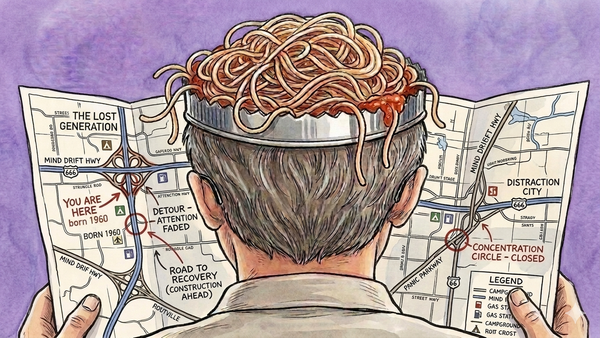
My brain's replay button gets stuck...sometimes the stop button is miswired too

My memories are very sensory, like vibrant video clips with audio while my body is wired to the real-time physical touch, taste, and smell sensations of the memory. My brain's routine of replaying the video tapes is what I call that mental process. It can be a useful thing, but when the replay button gets stuck in an infinite loop, it takes me straight to Crazy Town on the Express Train.
Sometimes I want to replay my memories, at least when I can dig them out and review them. Maybe I behaved poorly, or there was an awkward situation I caused, or one I was just a part of. So I go back in, dig up the memory footage, sit in my mental movie theater and review the video.
Other times, I’m reviewing the tapes, because I’ve been wronged (or I imagine I was wronged) and the injustice of the situation bugs the crap out of me. That goes for injustice toward myself, and also for injustice carried out by another toward a third party. Both kinds get me, and both kinds stick.
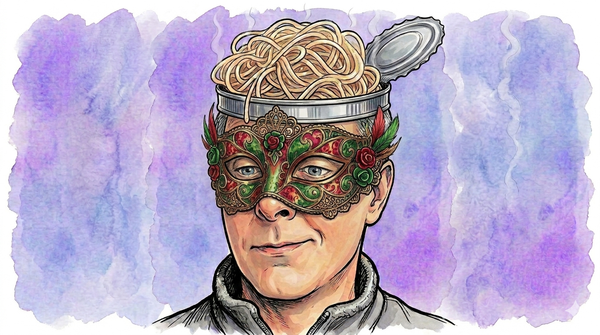
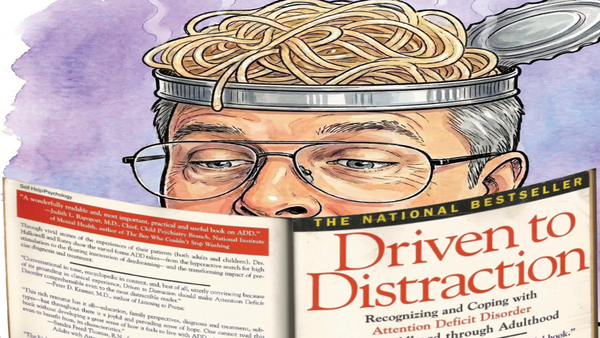
And then there are the times when my autistic and ADHD brain, or AuDHD as the neurodivergent community calls it, replays scenes and memories in an endless loop, completely on its own terms.
I don't always catch it right away. Raking leaves, reading a novel, zoning out in the yard: the memory projector can be stuck on replay and I won't even notice it.
When that happens, it's draining my energy which is why some days end with me feeling more exhausted then I would expect from the physical activity I've expended. If and when I do finally click into it, I try to actively reprogram my brain to stop the process.
The question I kept coming back to was:
Is there a clinical explanation?
I love to research stuff. This seemed like a totally justifiable rabbit hole. So, I researched it, fell down the rabbit hole, and learned some cool stuff while I was down there...
It turns out there are actual clinical names for what I've been calling "replaying the tapes." More than one, actually, and most of them make complete sense once we dig into the clinical research explaining our autistic and ADHD-wired brains.
It Has a Name (Actually, It Has Several)
The clinical term for what an autistic and ADHD brain like mine is doing is post-event rumination. Sometimes it's also referred to as Repetitive Negative Thinking, or RNT. The basic idea is the same: our brains keep replaying a memory over and over again, even when we don't want them to.[1][2][3]
Research shows that autistic brains and ADHD brains both do this a lot more than neurotypical brains. Since I have both autism and ADHD, I get a double scoop of cognitive delight every time post-event rumination kicks in.
What I found interesting is that not all of my replaying is the same kind of thing. Once I started reading more carefully, I realized it breaks down into three different types, each with its own reason for happening.
The "I Behaved Poorly" Replay
This is the type where I go back and review something I said or did, usually because it went wrong or felt awkward. Typically, I rightly feel like sh¡t about the scenario because of my behavior. Researchers call this social autopsy. It sounds dramatic, but the idea is pretty simple. It means going back over a social situation after it's done, picking it apart, and trying to figure out what happened.[4]
Here's the thing: autistic brains tend to process social situations after they happen, not while they’re happening. Most neurotypical brains are doing that work in real time, in the moment. My brain tends to get there later. Two-to-three steps too late. Apparently my brain loves to reprocess at 2 a.m.[4:1]
So the replay isn't random or pointless. My brain is genuinely trying to figure out what went wrong. I want to do better next time. It's just that it never quite feels done, so it reruns the whole thing over...again and again...and again...
The Injustice Loop
This is the type that's hardest for me to shut off. It happens when I feel like I've been treated unfairly. Even more intensely, it also fires when I see someone else getting treated unfairly, even if I'm not directly involved. Both versions trigger the same replay, and both are equally hard to let go of.
The clinical term for this is justice sensitivity. It's a well-documented feature of ADHD brains specifically. Studies show that people with ADHD feel injustice much more intensely than most people, and the urge to mentally "fix" an unfair situation can be so strong that ADHD brains will keep working on it long after everyone else has moved on.[5][6]
This one can really get us in trouble.
Rejection Sensitive Dysphoria, or RSD, is a related but slightly different idea. RSD is specifically about feeling rejected or criticized in a situation directly involving me. Justice sensitivity is broader: it fires any time something feels unfair, whether it happened to me or to someone else entirely. Both are real features of how ADHD brains work, and neither comes with a reliable off switch.[7]
The Endless Replay Memory Loop
The third type is less about a specific memory and more about mechanics. Sometimes the tape just plays on its own. No big reason behind it. No specific thing I'm trying to figure out. It just loops, and loops...and loops...and my brain seems to be spinning away like an off-the-tracks streaming-music algorithm.
That's the part of our brains called the Default Mode Network, or DMN. The DMN runs in the background when we're not focused on anything specific, sort of like background apps running on a phone. In most brains, the DMN and the focused-attention system take turns in a pretty organized way. In an ADHD brain, that handoff doesn't work as smoothly. The DMN can just take over and keep running old memories on repeat with no clear stopping point.[8]
This is the one that really drove me nuts during my middle-school years, when for a while I truly wondered if I controlled my brain, or if my brain controlled me...
Low dopamine makes this worse. Dopamine is the brain chemical that helps with focus and mental shifting. When it's low, the brain has a harder time switching gears and moving on to something new. That's why the endless brain loops tend to hit hardest at night or during quiet downtime, when nothing outside is demanding attention.[8:1][9][10]
Autism adds another layer called cognitive rigidity, which does exactly what it sounds like. It’s genuinely harder to let go of a thought once our brain has grabbed onto it.[4:2] So the ADHD keeps the endless loop running, and the autism makes it harder to exit. An awesome team, if by "awesome" you really mean frustratingly relentless.
My Instinct to Fight It Makes Sense
Here's the part I found genuinely reassuring. That thing I do, where I consciously try to interrupt the loop and force my brain somewhere else? That's a real therapeutic technique, one I thankfully figured out intuitively as a kid.[11]
Clinicians call it cognitive defusion. The basic idea is that you learn to notice the thought, label it as just a thought, and step back from it instead of getting pulled in. It's a core skill in Acceptance and Commitment Therapy (ACT) and also in Cognitive Behavioral Therapy (CBT), both of which have versions adapted specifically for autistic and ADHD adults.[11:1][12]
What I've been doing on my own, effectively manually overriding the loop, is essentially the same skill a therapist would teach.
Why My Brain's Wiring Makes It Harder
| What's happening | Autism's role | ADHD's role |
|---|---|---|
| Social replay | My brain processes social situations slowly, and needs closure | Strong emotions make charged memories harder to drop |
| Justice loops | A rigid sense of right and wrong keeps me stuck on unfairness | Justice sensitivity and hyperfocus lock onto what feels meaningful |
| Endless looping | Cognitive rigidity makes it hard to let a thought go | An overactive DMN, low dopamine, and poor mental-shifting keep the loop running |
Autism and ADHD don't just add together here. They interact and amplify each other, and the loops are the proof.[1:1][6:1][8:2]
The more of that understanding I learn from the clinical research, the more relief and a sense of peace I actually feel.
And sometimes, with this autism and ADHD stuff, just knowing more about it...helps.
What I, You, We Can Actually Do About It
The goal of cognitive defusion isn't to eliminate the thought (that rarely works, and fighting it often makes it stickier). The goal is to put some distance between me and the thought, to see it as just a thought passing through rather than a fact I'm obligated to keep examining.[11:2][12:1]
A few things that actually work for an autistic and/or ADHD brain:
Straight-up confession: these #NeurodivergentHAQs are my least favorite exercises to do. ALL of them. They're total anathema to my ADHD brain, because the act of interrupting my focus, my day, to actually do them is so counterintuitive. But they work.
Scheduled "worry time" — setting a literal timer for 10 to 15 minutes, intentionally replaying the video tape during that window, then stopping when the alarm goes off. The structure gives the brain permission to stop. Sounds corny, but sometimes the loop plays itself out in the given time frame and we walk away with a new insight as a bonus reward.[13][4:3]
The "thought parking lot" — write (or type) your looping thought down into a journal to externalize it. Getting it out of my head and onto paper tells my brain it doesn't have to keep holding onto the memory. I dump this stuff into a "General Ideas" sub-folder in iA Writer, with the idea that nothing is ever wasted when it comes to my time and creative energy.[4:4]
Grounding interrupts — there’s an overly complex clinical process for this one, but here’s my Keep-It-Simple-Steve (KISS) version — any imagined mental scene that shocks you or makes you laugh can instantly redirect your brain's energy.[13:1] The mental trick I figured out in fifth or sixth grade: I sing or hum a silly nursery rhyme.
Or, I spontaneously create the goofiest imaginary scenario in my head:
You're taking a break from Summer gardening for some sweet-tea and your favorite popsicle fudge bar...melting in your hand...you’re reaching in for a nibble and you lick your finger...and taste cat pooh instead of yummy chocolate! ...Hello, wash your hands much?
Shock and redirect your brain, the crazier the mental scene the better. It has to happen fast, like sneaking up behind someone and grabbing them as a surprise. Include sound, smell, taste, and emotional reactions, and bonus points if you make yourself laugh out loud. The whole point, no matter how absurd, is to instantly redirect your brain toward something else and move on with your day.
Physical movement — exercise isn't a cliché here. Treadmill time, a cold plunge, a walk, calisthenics will genuinely disrupt the Default Mode Network activity that drives our memory loop. Physical exercise disrupts it instantly.[14]
Just the thought of exercise itself can reset a replay loop. Say you're stuck on a plane, mid-flight for 4 to 5 hours, and your hyper-active brain is driving you crazy. Close your eyes and imagine you're naked and screaming while running up and down the plane aisle. You get the idea. Just like the grounding interrupts process above, you’re physically or mentally distracting your brain, redirecting its focus, and maybe even making yourself laugh along the way.[14:1]
Ultimately...
There is no one-tool-fits-all here. None of these ideas actually "fix" our cognitive wiring, and that's not really the point. For a brain that already knows how to replay its memory videos, the goal here is learning how to tune-in, control and redirect our memory when its play button gets stuck in an endless loop.[11:3][12:2]
Even the professional clinicians don’t universally agree on the best tools for our autistic and ADHD brains. My conclusion is that the best tools are the ones we research, adopt, and decide to use. So, you might give one or all of these a try. If we find that we’re actually using them, it’s because they consistently work for our individual needs.[15][16]
They're the tools that ultimately keep us off the Cognitive Crazy Train.
Keep on keeping on,
— Steve
P.S – Maybe give yourself...and your brain...a break today?
Simply Psychology. "Autistic Rumination: Why It Happens and How to Manage It." Simply Psychology, December 2024. https://www.simplypsychology.org/autistic-rumination.html ↩︎ ↩︎
PubMed Central / NIH. "An Integrative Model of ADHD Symptoms, Rumination, and Negative Thinking." PubMed Central, November 2024. https://pmc.ncbi.nlm.nih.gov/articles/PMC11594572/ ↩︎
Thornton, Charles. "ADHD and Rumination: Why Your Brain Replays Everything and How to Stop It." ADHD Philadelphia, December 2025. https://www.adhdphiladelphia.com/blog/-adhd-and-rumination-why-your-brain-replays-everything-and-how-to-stop-itby-charles-thornton-pmhnp-bc-adhd-philadelphia ↩︎
Blue Sky Learning. "Autistic Rumination: When Your Mind Won't Stop Thinking." Blue Sky Learning, November 2025. https://www.blueskylearning.ca/post/autistic-rumination-when-your-mind-won-t-stop-thinking ↩︎ ↩︎ ↩︎ ↩︎ ↩︎
Psychology Today. "How Justice Sensitivity Amplifies World Issues for ADHD." Psychology Today, July 2025. https://www.psychologytoday.com/us/blog/in-your-corner/202506/how-justice-sensitivity-amplifies-world-issues-for-adhd ↩︎
ADDitude Magazine. "Why Am I So Sensitive to Social Justice and Fairness Issues?" ADDitude Magazine, November 2022. https://www.additudemag.com/why-am-i-so-sensitive-adhd-in-adults ↩︎ ↩︎
Peace Humanistic Counseling. "When Fairness Feels Like a Threat: Justice Sensitivity and the ADHD Nervous System." Peace Humanistic Counseling, January 2026. https://www.peacehumanistic.com/blog/when-fairness-feels-like-a-threat-justice-sensitivity-and-the-adhd-nervous-system ↩︎
Focused Mind ADHD Counseling. "Rumination in ADHD: Understanding Overthinking." Focused Mind ADHD Counseling, March 2026. https://focusedmindadhdcounseling.com/what-is-rumination-understanding-overthinking-in-adhd ↩︎ ↩︎ ↩︎
Eton Psychiatrists. "What Dopamine Reveals About Autism." Eton Psychiatrists, September 2025. https://etonpsychiatrists.co.uk/blog/what-dopamine-reveals-about-autism ↩︎
Knopf, Essy. "Understanding Neurodivergent Dopamine Crashes." EssyKnopf.com, January 2026. https://www.essyknopf.com/dopamine-crashes ↩︎
CogBT Therapy. "Cognitive Defusion Techniques and Exercises." CogBT Therapy, December 2023. https://cogbtherapy.com/cbt-blog/cognitive-defusion-techniques-and-exercises ↩︎ ↩︎ ↩︎ ↩︎
Find Inner Calm. "Using ACT and Cognitive Defusion to Improve Negative Thinking." Find Inner Calm, December 2025. https://findinnercalm.ca/using-act-and-cognitive-defusion-to-improve-negative-thinking ↩︎ ↩︎ ↩︎
Simply Psychology. "12 Ways to Manage Autistic Rumination." Simply Psychology, July 2025. https://www.simplypsychology.org/how-to-stop-autistic-rumination.html ↩︎ ↩︎
Healing Psychiatry Florida. "Overcome ADHD Rumination: 7 Strategies to Improve Well-Being." Healing Psychiatry Florida, July 2024. https://www.healingpsychiatryflorida.com/adhd/adhd-rumination ↩︎ ↩︎
University of Virginia School of Education. "Autism Researchers Compare Mental Health Benefits of Mindfulness and Cognitive Behavioral Therapy." University of Virginia, July 2023. https://education.virginia.edu/news-stories/autism-researchers-compare-mental-health-benefits-mindfulness-and-cognitive-behavioral-therapy ↩︎
CenterWatch Clinical Trials. "Comparing Cognitive-Behavioral Therapy Versus Mindfulness-Based Therapy." CenterWatch, June 2024. https://www.centerwatch.com/clinical-trials/listings/NCT06060860/comparing-cognitive-behavioral-therapy-versus-mindfulness-based ↩︎